Leadership and Management Performance 

Equipping leaders to navigate complexity and create lasting impact


Strong leadership is fundamental to organisational success. Leaders and managers shape culture, influence performance and create the conditions for people to do their best work.


We work with organisations to strengthen leadership capability at every level, from those stepping into management for the first time to experienced leaders navigating greater complexity, change and strategic challenges.


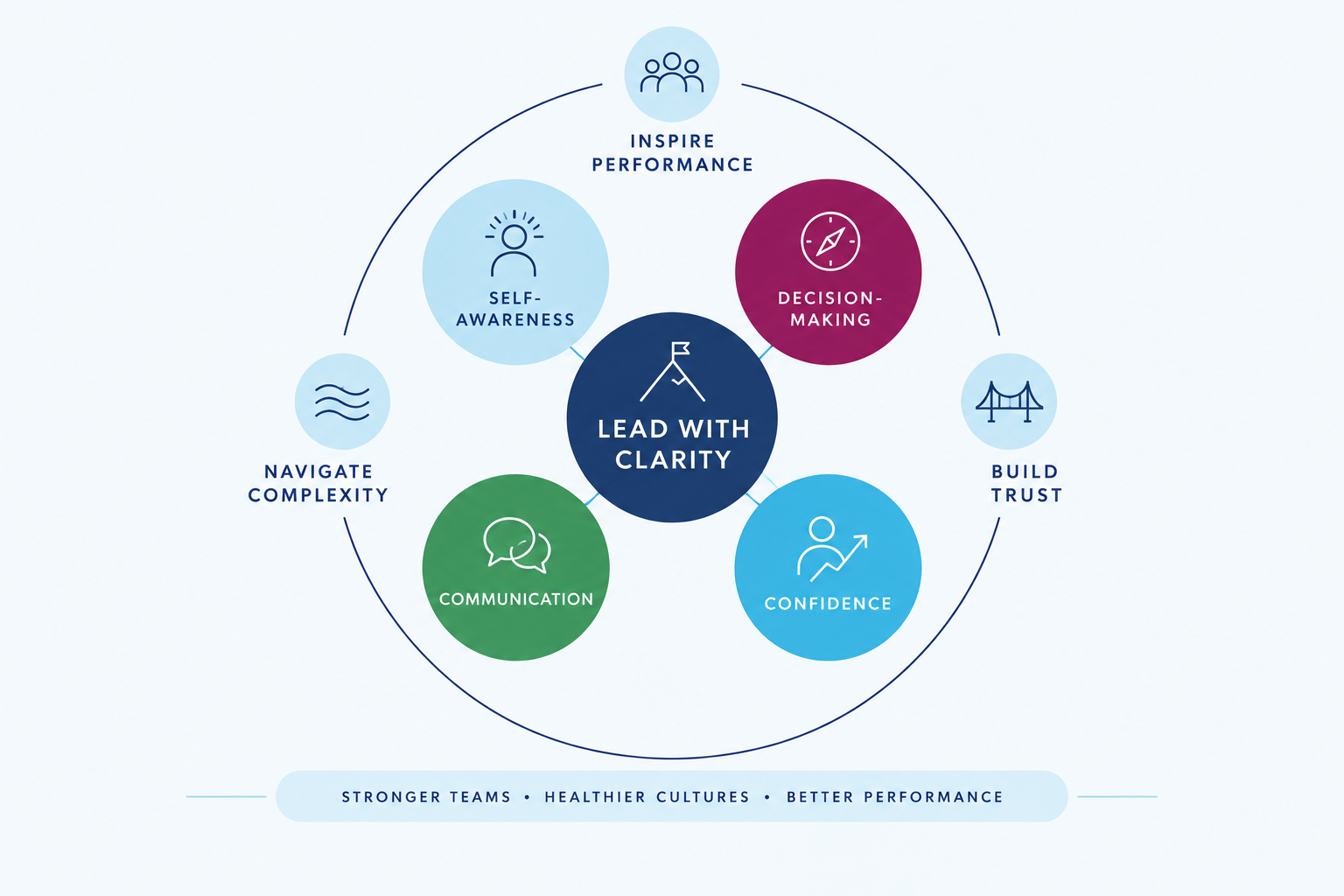
Through tailored experiences, we help leaders build self-awareness, sharpen decision-making, strengthen communication and increase their confidence to lead with clarity and purpose.


The outcome is leaders who are better equipped to inspire performance, navigate complexity and create the conditions for their teams and organisations to thrive.

Verosa's leadership development approach builds self-awareness, decision-making, communication and confidence, helping leaders inspire performance, build trust and navigate complexity.
UNLOCK POTENTIAL ACROSS YOUR ORGANISATION

The Verosa Leadership team are impactful, ready for challenge and have partnered with us closely, to become an integral part of our extended team.

Robert King, Head of Talent Development, Crédit Agricole Corporate Investment Bank

CASE STUDY:

Iris Software Group - Leadership Programme 


This large-scale management and leadership training programme for a geographically diverse technology company, was commissioned to upskill Middle Managers and Senior Leaders across the organisation and to support better performance, increased employee engagement levels and talent development.


Verosa worked closely with our client partners to conduct an in-depth needs analysis across the business, identifying skills, knowledge and behavioural gaps and challenges.

READ THE FULL CASE STUDY

Related Articles

by Richard Hood • 19 October 2026
In many organisations, upward communication is treated as a personal skill: be clearer, be braver, be more structured. But the reality is far less individual. People shape their updates around what experience has taught them is welcome, safe and worth the effort. The pattern of what travels upwards is one of the clearest indicators of culture, yet one of the easiest to overlook. Four types of conversations tend to dominate: Progress Problems Propositions Possibilities The mix is rarely accidental. Progress conversations reassure leaders that work is moving; they help coordinate decisions and demonstrate reliability. Yet progress updates often drift into activity rather than impact. When teams learn that uncertainty attracts interrogation, ‘all on track’ becomes a survival strategy rather than a meaningful statement. A culture that only rewards good news trains people to curate reality. Problems are the issues that need attention. Responsible leadership involves raising concerns early, but many hesitate – not because they lack judgement, but because they have learnt what happens next. If bad news is met with defensiveness, frustration or a forensic search for blame, people stop bringing it. The advice to, ‘bring solutions, not problems’ sounds empowering but often silences the very signals leaders most need to hear. Sometimes a solution isn’t available, sometimes authority or resources are required, and sometimes the most valuable thing someone can offer is an early signal that something is starting to come unstuck. Propositions are recommendations: a view on what should happen and why. They reveal how someone thinks. But propositions require psychological safety. When leaders dismantle ideas in public or treat disagreement as disloyalty, teams quickly learn that offering a view is risky. Waiting to be told what to do becomes a rational response, not a lack of initiative. Possibilities are early ideas – emerging needs, patterns, experiments or things that could be stopped. These conversations disappear fastest in cultures dominated by delivery. Possibilities are fragile. They need curiosity, not perfection. When the first untidy idea is dismissed, people stop noticing the second. The pattern matters. If leaders mostly hear progress, they are not hearing the truth. If they rarely hear problems, they are not hearing risk. If propositions are thin, thinking has gone underground. And if possibilities have vanished, innovation has too. The question for leaders is simple: What do people bring to you and what have you taught them to bring?
14 October 2026
As the year closes, senior people and capability leaders are entering a critical inflection point – not a reflective phase, but a decisive one. The organisations that will move confidently into 2027 are those willing to confront what hasn’t shifted, name what’s been avoided and set bolder conditions for the year ahead. This moment isn’t routine; it’s a reset. The final months of the year will determine whether leaders step into January prepared for the pace that’s about to hit, or whether they’re left playing catch up. 2026 has been a year of consolidation for many organisations, but not in a gentle way. Leaders have been steadying systems while navigating restructures, redundancies and the uncomfortable reality that some long‑standing ways of working no longer fit. In several sectors, geopolitical shifts and rapid advances in technology have fundamentally changed how organisations operate. Stability has been necessary, but it has also masked a deeper truth: the environment is reshaping faster than most leadership expectations. The signals for 2027 are clear: pace is increasing, business models are shifting and leaders will need to operate with sharper clarity, stronger cohesion and more visible impact than they have in years. The organisations that thrive next year will be those who stop waiting for clarity to emerge and start engineering it. This is the moment to raise expectations, strengthen capability and build the conditions for acceleration before the year begins. Four shifts leaders need now (not in January) 1. Set clarity before pace, but keep it flexible Acceleration only works when leaders know what they’re accelerating toward – but 2027 won’t offer the luxury of fixed priorities. The picture will keep evolving. Leaders need clarity that reduces friction and strengthens confidence, but they also need the flexibility to adjust direction as conditions shift. This is the new normal: write the priorities down, but write them in pencil. The organisations that thrive will be those who can articulate direction and adapt it quickly without losing momentum. 2. Strengthen leadership confidence and elevate critical thinking The leaders who will excel next year are those who feel equipped, supported and ready, not just aligned. Alignment matters, but critical thinking is what will differentiate performance when the pace increases. Leaders will need to interrogate assumptions, make sharper decisions and navigate ambiguity with more independence. Investing in capability now, particularly around communication, presence, decision making and critical thinking, helps leaders enter 2027 with momentum. Confidence is a performance driver; it shapes how leaders show up when the environment becomes more complex. 3. Build enterprise‑wide teamship, because silos will break under pressure Next year will demand collaboration that is faster, cleaner and more fluid. The final months of 2026 are the window to reinforce shared learning, deepen cross‑functional trust and prepare leaders to orchestrate collaboration across the whole system. Stronger teamship doesn’t just feel good, it accelerates delivery, reduces duplication and builds cultural momentum that leaders can’t manufacture later. 4. Get ahead of talent and capability gaps radically earlier than usual 2027 will bring sharper expectations around performance, agility and enterprise‑level contribution. Waiting until Q1 to identify capability gaps will be too late. Now is the moment to map emerging skills needs, strengthen succession conversations and align investment with the capabilities that will matter most. Leaders need to enter the new year with clarity on their talent and confidence in their pipeline. As organisations look ahead, the opportunity is clear: use these final months to build the clarity, capability and confidence leaders will need for a faster, more connected 2027. The pace is rising. The organisations who prepare now will accelerate. Those who don’t will feel it.

Talk to us today about your Management and Leadership challenges.